

Cart
0
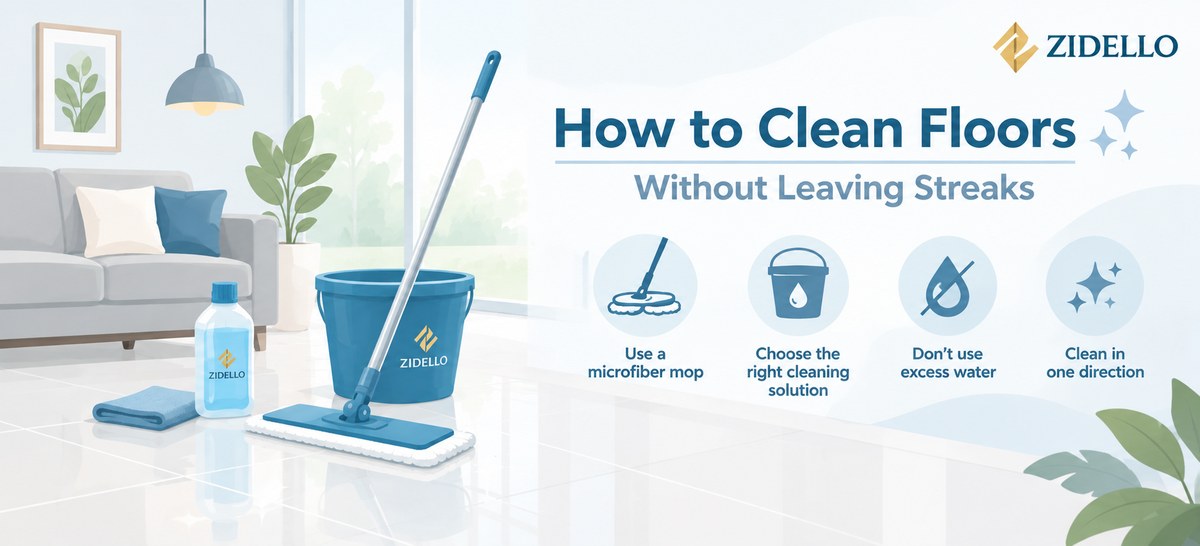
Quick Answer
Streak-free floors come down to three things: use less water, use the right amount of cleaner, and dry the floor instead of letting it air-dry. Wring your mop until it's just damp, rinse it in clean water often, and finish with a dry microfiber mop or squeegee wiper. This removes leftover soap and mineral residue before it dries into visible streaks.
Why Floors Get Streaky After Mopping
Streaks are not an indication that the floor is dirty; they indicate that some moisture has been left that is dried in place. The most common reasons for streaking are using too much water, using dirty mop water, putting on too much cleaning solution, or leaving the floor alone to dry instead of wiping it dry. All of these contribute to leaving a light layer of film which, when the water evaporates, can be seen as streaks and cloudy patches, particularly on floors made of tile, marble, or vinyl.
Step-by-Step: How to Mop Floors Without Streaks
1. Sweep or dust first
Loose dust and grit mix with mop water and get dragged across the floor, which is one of the fastest ways to cause streaking. Sweep or dry-dust the floor before you bring out any water.
2. Use the right amount of cleaner
More cleaner does not mean cleaner floors. Follow the dilution instructions on the bottle — too much solution leaves a soapy film that dries into streaks.
3. Wring or spin the mop well
A dripping mop leaves too much water on the floor. Wring a traditional mop firmly, or use a spin mop bucket so the head comes out damp rather than soaked.
4. Change the water often
Once mop water looks cloudy or grey, it's redistributing dirt rather than lifting it. Refill with clean water every one or two rooms for larger homes.
5. Dry the floor — don't let it air-dry
This is the step most people skip. Go over the floor with a dry microfiber mop or a floor squeegee wiper right after mopping. Drying removes the last bit of moisture before it can evaporate into a streak.
Best Tools for a Streak-Free Floor
The right tools make streak-free results much easier to get consistently:
• Microfiber mop — microfiber lifts residue instead of just pushing it around, unlike cotton strands
• Spin mop with a spin-dry bucket — gives you consistent, controlled moisture instead of a soaked mop head
• Floor wiper or squeegee — ideal for the final drying pass on tile, marble, and vinyl
• Clean microfiber cloths — useful for spot-drying edges, corners, and high-shine areas
Zidello's Spin Mop range is built for exactly this kind of controlled, low-residue mopping, and the Floor Wiper / Squeegee collection works well as a fast drying pass right after mopping. For daily touch-ups between full mops, the Microfiber Cloths are handy for wiping down spots before they dry into marks.
Floor-Type Specific Tips
Marble floors
Marble shows streaks and water spots easily. Use minimal water, avoid acidic or heavily scented cleaners, and always dry the surface with a squeegee wiper or soft microfiber cloth.
Tile floors
Grout lines trap dirty water, which often causes the hazy streaks you see between tiles. Rinse the mop frequently and pay extra attention to grout lines with a damp, not wet, mop head.
Vinyl floors
Vinyl is sensitive to excess water pooling at the seams. Mop in sections and dry as you go rather than covering the whole floor before drying.
Wood floors
Wood should get the least water of all. Use a barely-damp microfiber mop and dry immediately — standing water is the biggest risk to both streaking and long-term damage.
Common Mistakes That Cause Streaks
|
Cause of Streaks |
Why It Happens |
Fix |
|
Too much water on the mop |
Excess water dries unevenly and leaves marks |
Wring or spin the mop until it's just damp, not dripping |
|
Dirty mop water |
Reusing grimy water spreads residue instead of removing it |
Change the water as soon as it looks cloudy |
|
Wrong or too much cleaner |
Soap residue dries into a cloudy film |
Use a mild floor cleaner and follow the dilution ratio |
|
Old or dirty mop head |
A saturated, worn head redistributes dirt instead of lifting it |
Rinse the mop head often; replace it every 3–6 months |
|
Floor left to air-dry |
Water evaporates unevenly, leaving mineral or soap marks |
Dry the floor with a squeegee wiper or microfiber cloth |
FAQs
Why do my floors look streaky even after mopping?
Streaks usually come from too much water, too much cleaner, or dirty mop water being spread across the floor and left to air-dry. Drying the floor after mopping is the fastest fix.
What is the best way to clean floors without streaks?
Sweep first, use a well-wrung or spin-dried mop with clean water and the correct amount of cleaner, mop in straight overlapping lines, and dry the floor with a squeegee or microfiber cloth.
Does using more cleaning solution make floors cleaner?
No. Extra cleaner often leaves behind a soapy film that dries into a cloudy streak. Stick to the dilution ratio recommended on the product.
Should I dry my floor after mopping?
Yes. Air-drying allows water and residue to evaporate unevenly, which is one of the main causes of streaks. A quick pass with a dry mop or squeegee prevents this.
What's the best mop for streak-free marble floors?
The most appropriate mop for marble is the microfiber spin mops, which enable better water control compared to the traditional cotton mops and reduced the streaks and the water spots that might appear on marble.
Conclusion
Achieving streak-free floors is not only about scrubbing harder but also about keeping the water and residue in check at all the stages of cleaning.