
Cart
0
Quick Answer
A spin mop and a traditional mop both clean floors well. A spin mop wins on water control and effort; it spins itself dry, so you're not bending over to wring it out by hand. A traditional mop still makes sense for small spaces, rough outdoor floors, or a tighter budget. For a full house cleaned regularly, the spin mop is the better everyday pick.
Intro
Both mops do the same basic job: lift dirt and water off your floor. The difference isn't in what they clean, it's in how much effort and mess it takes to get there.
This guide covers the real differences. You'll learn how each one actually performs, what they cost over time, and which one fits your floors, your home size, and how often you clean.
What's the Real Difference Between a Spin Mop and a Traditional Mop?
A traditional mop cotton strand or flat mop gets dipped in a bucket and wrung out by hand, or with a basic press wringer, before it touches the floor. It's the mop most households in Pakistan have used for generations, and it's still everywhere because it's cheap and simple.
A spin mop works differently. The bucket has a spinning basket built in. You dunk the microfiber head, drop it into the basket, and pedal or twist to spin the water out mechanically instead of squeezing it by hand.
Here's the thing people don't expect: that one mechanical step spinning instead of hand-wringing is really what the entire comparison comes down to. Everything else traces back to it.
In short: a traditional mop relies on you to wring it by hand. A spin mop does that part for you.
Which One Actually Cleans Better?
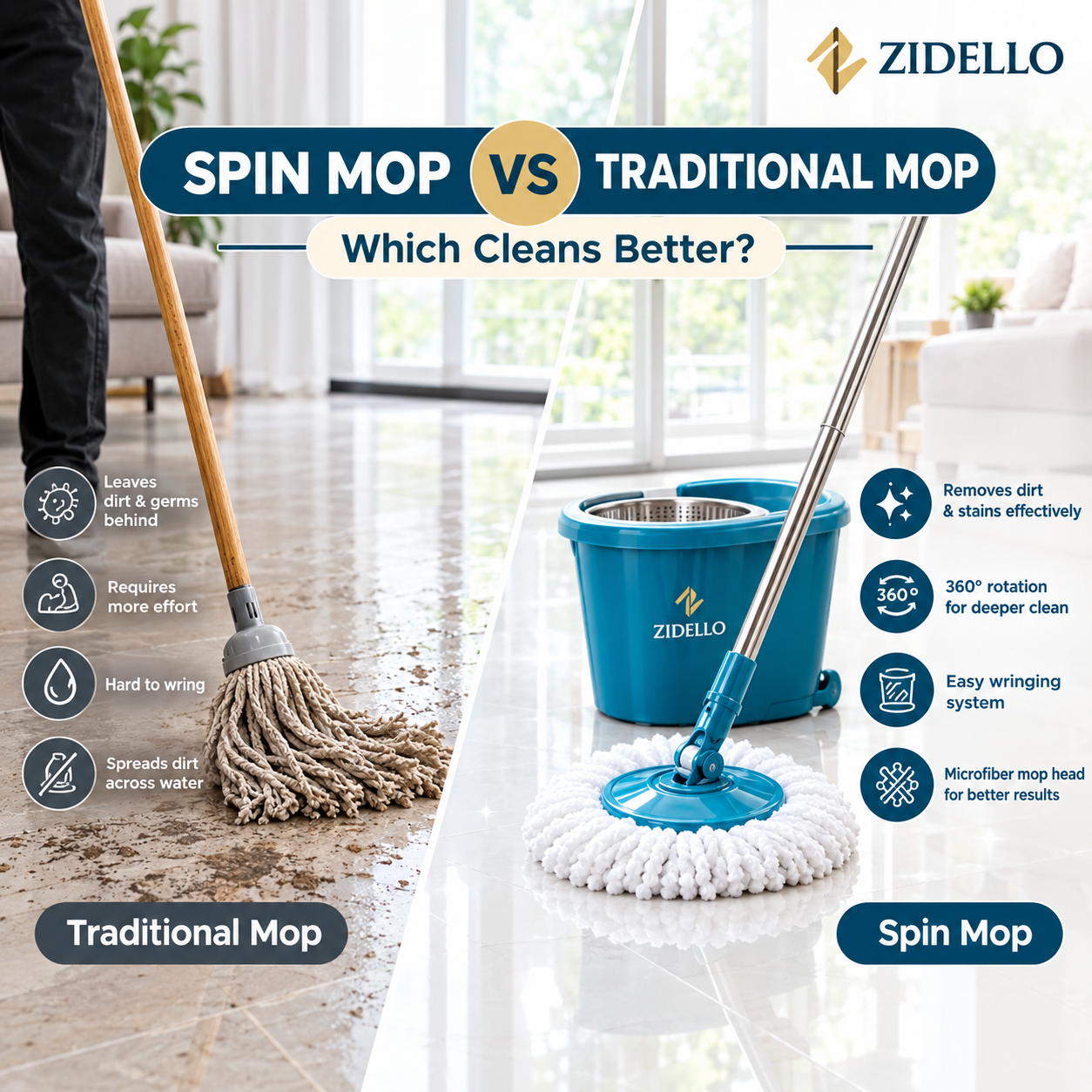
Both mops lift dirt and grime off hard floors effectively. The real gap isn't cleaning power, it's water control.
A spin mop leaves the head damp, not dripping, because the spin basket removes excess water almost instantly. That means less water sitting on your floor, faster drying, and less risk of streaks once it dries.
A traditional mop depends on how well you wring it by hand. Wring too hard and the floor barely gets cleaned. Wring too little and you're left with puddles that take much longer to dry and become a slip risk indoors.
Microfiber heads, which most spin mops use, also pick up fine dust and hair more effectively than cotton strands, which tend to push fine particles around rather than lift them.
In short: cleaning power is close. Water control is where the spin mop pulls ahead.
Which Is Better for Small Homes, Full Houses, and Outdoor Areas?
A small flat mopped occasionally works fine with a traditional mop; there's no real need to spend more on a bucket-and-spin system for light, infrequent use.
A full house mopped regularly is where a spin mop earns its cost back in saved time and effort. Less bending, faster drying between rooms, fewer trips back to the bucket to wring by hand.
Outdoor spaces, verandas, and rough or uneven flooring are still better suited to a traditional mop or a floor wiper; a spin mop's microfiber head is built for smooth indoor surfaces and can snag on rough ground.
Quick guide:
-
Small flat, light use: traditional mop works fine.
-
Full house, regular cleaning: spin mop is the better fit.
-
Outdoor or rough flooring: traditional mop or floor wiper.
-
Anyone with back or knee pain: spin mop, without much debate.
Which One Is Cheaper Over Time?
A traditional mop costs less upfront, often a fraction of a spin mop and bucket set. For light, occasional use, that lower cost is hard to argue with.
A spin mop costs more to start, but the head is detachable, washable, and typically lasts for months before it needs replacing. Traditional cotton heads wear out and flatten faster, so the savings on day one can shrink over a year of regular use.
If a spin mop head does wear out, buying just the refill head rather than a whole new mop and bucket keeps the long-term cost close to what a traditional mop would run you anyway.
In short: traditional mops win on upfront price. Spin mops can close that gap over time, especially with refill heads instead of full replacements.
Which Is Gentler on Your Floors?
This matters more than people think, especially for wood and marble.
A spin mop's controlled, damp head is safer for these surfaces because it limits how much water sits on them. Standing water left too long on marble or unsealed wood can affect the finish over time.
A traditional mop, if wrung out properly, can also be used safely on these floors but hand-wringing is inconsistent, and it's easy to leave more water behind than intended, especially when you're mopping quickly.
Tip: on wood or marble, always wring the mop spin or traditional until it feels barely damp, not wet, before it touches the floor.
In short: a spin mop makes it easier to control water on delicate floors. A traditional mop can do the same, but it depends more on technique.
What About Storage, Mess, and Ease of Use?
A traditional mop is simple dip, wring, mop, done. But a mop left standing in a bucket or leaning in a corner between uses can develop a smell if it's not rinsed and hung to dry properly.
A spin mop's bucket takes up more storage space, but the process itself is easier no bending, no manual wringing, and the head detaches for a proper wash whenever it needs one.
For kids, older family members, or anyone who finds it hard to grip and wring a wet mop by hand, the spin mop's pedal mechanism is genuinely easier to use without help.
In short: traditional mops are simpler to store. Spin mops are easier to actually use, session after session.
What Should Larger Households or Frequent Cleaners Choose?
For anyone mopping several rooms a few times a week, a spin mop is the more practical everyday tool. It handles the two things that make mopping tiring bending and wringing and it dries floors faster, which matters in households with kids or pets moving through right after cleaning.
If you're setting one up for the first time, or your current mop's head has finally worn out, Zidello's Spin Mop range includes 360° rotating heads with detachable microfiber, along with both plastic and steel bucket options plus refill heads sold on their own, so the whole set doesn't need replacing once the head wears down. For homes that want a lighter option for quick touch-ups between full mopping sessions, the Microfiber Flat Mop handles both wet and dry cleaning without the bucket setup.
Final Verdict
For small spaces, occasional cleaning, or a tighter budget, a traditional mop still does the job well and costs less to start.
For full houses, regular cleaning routines, or anyone dealing with wood or marble floors, a spin mop is the better everyday choice; it controls water more consistently and asks a lot less of your back.
Both mops clean a floor properly when used correctly. The real decision comes down to how often you're mopping, how big the space is, and what your floors are actually made of.
If your current mop has seen better days, take a look at Zidello's Spin Mop collection, or browse the full Mops range to find the setup that actually fits your floors and your routine.
FAQs
Is a spin mop better than a regular mop?
For most indoor floors, yes it controls water more consistently and dries the floor faster, without the hand-wringing that makes a traditional mop tiring over a full house.
Which mop is best for marble floors?
A spin mop, mainly because it limits how much water sits on the surface. Marble doesn't hold up well to standing water over time, and a spin mop keeps that in check more reliably than hand-wringing does.
Do spin mops really clean better than string mops?
Cleaning power is close either way. The real difference is that a spin mop's head stays evenly damp and the basket removes dirty water instantly, instead of letting it soak back into the mop.
Are spin mops worth the extra cost?
For regular use, usually yes. Since you're replacing just the head instead of the whole mop, the cost tends to even out or come out ahead over a year or two compared to constantly replacing a traditional mop.
Can I use a spin mop on wooden floors?
Yes, as long as the head is wrung out well before use. If anything, a spin mop is the safer option for wood since it leaves less standing water than a hand-wrung traditional mop typically does.